|

|
|
|
Dear CAPCSD Member,
It’s September. I feel like that is a sentence, question, and exclamation all at the same time. It is the time of the semester where I start to mutter to myself,
“Why isn’t there a safety town for college students?”
Let me guess, not what you expected me to say. Do you know what safety town is? If you aren’t familiar, safety town is usually a one-week program that teaches children around five years old safety skills. Topics covered are things like crossing the street, stranger danger, how to ride a bus safely, how to ride a bike, and safety sign awareness. The first safety town was held in 1937 and then was formalized in Bedford, Ohio in 1964. Which happens to be where I live; they are now all over the country.
(Yes, I know this feels tangential but hang in there you are almost to the point.) Safety town was established to give children the skills and safely practice going to school. You read that right, children who did not understand the safety rules of the road were experiencing injuries some fatal, so a group of people said let’s teach the hidden curriculum that these children need to access education.
Doesn’t that feel like a college campus? Where the routines of campus life collide with all the unwritten rules that we assume students have already learned? How many times have you said the phrase “common sense” in the last month? the last year? Perhaps this common sense isn’t common at all and is part of a hidden curriculum that makes access to the education and skills we provide difficult. I encourage you to spend some time with our DEIB article this month, “Teaching CSD Students is a Public Health Issue.”
Board Update The Board of Directors worked this past month with Committee Chairs to develop goals related to the strategic initiatives of advocacy, clinical education, admissions, and competency-based education. Committee Chairs participated in an orientation session led by Clark and Sanchez Consulting on committee leadership including contributions from two of our committee chairs Christi Masters and Lisa Bowers. Thank you to everyone who participated.
As we settle into the semester, please take a moment and look through the webinar offerings from CAPCSD this month. Let’s keep learning and growing together!
Oh, and watch out for students on the crosswalk and those not on the crosswalk (I’m telling you, safety town)! Warm regards,
Christie |
|
Christie Needham President |
|

|
|
|
Important Dates |
|
Below are the upcoming important dates so that you may plan accordingly. Dates are subject to change. CAPCSD will send separate email for each of the below dates with official information. |
|

|
|
Proposed Federal Accreditation Changes Could Affect CAA and Accredited Programs |
|
The U.S. Department of Education is moving forward with significant changes to the federal requirements for recognized accrediting agencies. This rulemaking, known as Accreditation, Innovation, and Modernization (AIM), grew out of a 2025 executive order directing the Department of Education to review and revise federal accreditation requirements. A negotiating committee representing accreditors, institutions, and other stakeholders met earlier this year and reached consensus on draft regulatory text addressing a range of issues, including accreditation; conflict of interest requirements; outcome metrics; and viewpoint diversity.
Several of the proposed changes could directly affect the Council on Academic Accreditation in Audiology and Speech-Language Pathology’s (CAA) relationship with the American Speech-Language-Hearing Association (ASHA) and the requirements for accrediting agencies to operate separately and independently from related organizations under the Higher Education Act (HEA).
Read more about how these proposed changes can affect the CAA and accredited programs. Additional Background
ContactFor questions about CAA’s information regarding the proposed rule, contact accreditation@asha.org. |
|
|
|

|
Clinical Educators' Academy applications open until 9/30 |
Apply today!Faculty from CAPCSD member programs are invited to apply to the CAPCSD Clinical Educators' Academy. This in-person event will be held in the days leading up to the 2027 CAPCSD Annual Conference at the Atlanta Marriott Marquis. In order to apply, the applicant’s program must be a CAPCSD member with their 2026-2027 membership dues paid in full as of September 15, 2026. Tuesday - Wednesday, March 30 - 31, 2027 Important Dates
Program Description
The Clinical Educators’ Academy continues to contribute to CAPCSD’s mission and vision of advancing academic leadership and program excellence in Communication Sciences and Disorders. This day and a half opportunity if for leaders in CSD clinical education to take time to consider their professional identity, develop coaching strategies, and consider ways their program supports students and professionals. Sessions will include keynote from dB Coaching Group founders Amy Badstubner, AuD, CPC, and Kari Dermer, AuD, CPC, ELI-MP, which will lay the foundation for participants to focus on ways to support professionals around clinical education topics. This in person event will be scheduled immediately preceding the 2027 CAPCSD conference in Atlanta, GA. It will consistent of a day and a half of content from CSD professionals plus a series of 4 follow up webinars across the 12 months that follow.
|
|
|
|

|
Annual Conference Call for Papers |
|
Submit your paper or poster proposal today for consideration to be selected for CAPCSD's 2027 Annual Conference! The submission window will close on Wednesday, September 16, 2026 at 11:59 PM ET.
We welcome proposals that explore innovative, evidence-informed, and collaborative approaches to advancing communication sciences and disorders education. We encourage submissions that foster inclusive, supportive, and collaborative learning and clinical environments while advancing teaching, leadership, student success, clinical education, and program excellence. Proposals may address the conference theme or one of the following topic areas:
Clinical Education & Supervision Technology & Innovation Teaching & Learning Excellence Innovative Curriculum & Assessment Student Success Leadership & Development Additional Topic Areas (other than those above) EXHIBITOR Education Presentation Conference theme: Cultivating Connection: Advancing Leadership, Learning, & Community
For full details, please visit our Call for Papers & Posters webpage. |
|

|
Scholarship Openings |
|
2026-2027 Scholarships & Grants Applications are Now Open
The CAPCSD Scholarship and Grant Portal for the 2026-2027 application cycle is now open and closes on October 26, 2026, at 11:59 AM EST. Students and faculty in CAPCSD member programs with membership paid in full no later than September 15, 2026, are eligible to apply to three different scholarship and grant competitions, each with its unique focus.
Visit the CAPCSD Scholarships and Grants page for more information and to apply: https://www.capcsd.org/scholarships/. |
|
|
|
CAPCSD Board Buddy |
|
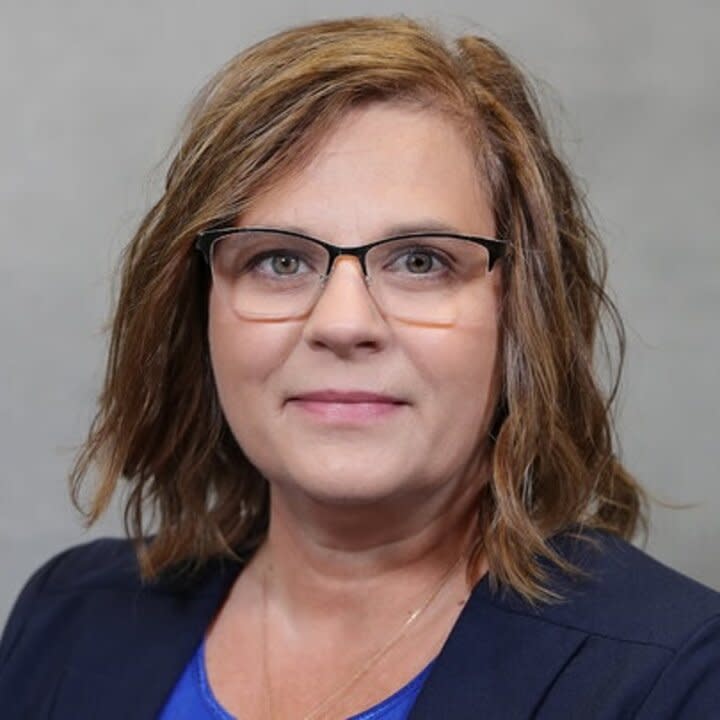
CAPCSD's Board of Directors assigned a "Board Buddy" to each of its new board members to help transition into their new terms on the CAPCSD Board of Directors. To help our CAPCSD member programs get to know our new board members, each month the newsletter will feature a board buddy asking the new board member questions. This month, VP of Clinical Education, Andy Clare, posed these questions to the new VP of Research and Academic Affairs, Miechelle McKelvey. |
|
What inspired you to join the board?
|
|
|
What unique perspective or experience do you bring to the board?
Throughout my career, I've had the privilege of working across diverse teams and leadership settings. Those experiences have taught me the importance of listening first, building consensus, and keeping the focus on mission-driven outcomes. I strive to bring a strategic perspective while staying grounded in the day-to-day realities our members face. |
|
|
|
DEIB |
|
Teaching CSD Students is a Public Health Issue |
|
As CSD faculty, we spend long days teaching our students “how.” We help them take a better case history, notice a clinical detail, or more quickly meet a client’s need. As we’re doing that, though, we’re also teaching our students “who.” Who is an SLP or an audiologist? How do they act? What do they prioritize and value? We help our students learn who they are as a clinician, which is an identity they likely haven’t experienced before. Yet, we don’t often consider how we’re conveying these expectations or whether the expectations are an appropriate fit for each of our students.
Public health research considers a client’s ability to access culturally-concordant care (care from a clinician who shares their cultural background) to be one of many social determinants of health. |
|

|
A client’s ability to receive services from clinicians who understand their language, culture, community context, communication practices, and lived experiences can shape trust, diagnosis, treatment engagement, follow-through, and ultimately health equity. In medicine, culturally-concordant care has been linked to improved health outcomes, like reduced morbidity, increased patient decision-making in their own care, and enhanced follow-through with care plans. Read more.... |
|
|
|
Admissions Corner |
|
|
|
New On-Demand Deferral Process A new On-Demand Deferral process will launch in the 26-27 cycle, replacing the previous transfer settings-based deferral method. This process allows programs to defer applicants during designated time windows. Deferred applicants are applicants who:
Deferred applicants are not the same as re-applicants. If your applicant falls into one of these categories, direct them to the re-applicant process instead:
Deferral Time Windows
Additional communications and reminders will be provided ahead of each window to support programs using this new process. For step-by-step instructions, refer to the full documentation: https://help.liaisonedu.com/WebAdMIT/Managing_Your_Applicant_Pool/Deferring_Applicants_On_Demand |
|
|
|
CSDCAS Final Decisions Due: September 30, 2026! All CSDCAS participating programs agree to provide their final decision data to CAPCSD annually in WebAdMIT. One of the following final decision codes must be assigned to each verified applicant:
All other decisions (Offer Accepted, Offer Made, Interviewed, and Wait-Listed) are not final decisions and applications remaining in those categories need to be assigned to one of the final decision codes above. Applicants without a verified status (in progress, complete, received, on hold, etc.) do not need a decision code if you did not review them. Here are the instructions to set these up:https://www.capcsd.org/csdcas-final-decisions/.
|
|
|
|
If you need help with the admissions processes for your MA/MS and/or AuD graduate education programs, or you need help with WebAdMIT or CSDCAS, please do not hesitate to reach out to the Admissions Committee and CAPCSD’s Director of Centralized Admissions.
Admissions Committee Contacts https://members.capcsd.org/admissionscommittee
Teasha McKinley, Director of Centralized Admissions |
|

|
|
|

|
|
|
If you can't attend the live webinar, register now and receive a recording of the webinar to view at your convenience. Please note, only registrants who attend the live webinar are eligible for ASHA CEUs. |
|
|
|
How Federal Policy Changes Impact Audiologists, SLPs, and the People They Serve
🗓️ Thursday, September 3, 2026 0.10 ASHA CEUs |
|
|
|
Ready for Clinic: Professionalism and Workplace Readiness for CSD Students
🗓️ Wednesday, September 23, 2026 0.10 ASHA CEUs |
|
|
CAPCSD Leadership Series | Fall 2026
|
|
Part 1:
Thursday, Sept 10th 0.15 ASHA CEUs
|
|
Part 3: Leading Through Uncertainty and Imperfect Choices 0.15 ASHA CEUs
|
|
|
Bring Social Determinants of Health Into Your CSD Curriculum
|
|
Integrating Social Determinants of Health into CSD Curricula Part I Tuesday, Sept 29th 0.15 ASHA CEUs
|
|
Integrating Social Determinants of Health into CSD Curricula Part II Tuesday, October 6th 0.15 ASHA CEUs
|
|
|
|


|
https://www.capcsd.org September 2026 |