|

|
|
|
Happy New Year from CAPCSD! |
|

|
Dear CAPCSD Member,
Happy New Year! I hope 2026 is off to a great start for you. As we kick off this year, I’ve been thinking about the power of setting an intention—a single word to help guide us through whatever comes our way. My word for this year is serenity. For me, it’s a gentle reminder to slow down, find calm in the middle of busy schedules, and create spaces where our students and colleagues feel supported and at ease.
This month’s newsletter is full of ways to do just that. Conference registration is officially open—I’d love to see you there! It’s always such a great opportunity to connect and recharge with our community. We’re also sharing an article on fostering belonging in our programs and an Admissions Corner piece with practical tips for attracting applicants.
Here’s to a year of meaningful work, shared ideas, and moments of calm along the way.
Warmly, |
|
|
Tricia Montgomery President |
|
|
|
Key Principles in CSD Clinical Education: Free Course for CAPCSD Members and their Clinical Education Partners! |
|
Preceptors play a powerful role in shaping the next generation of clinicians, and CAPCSD’s Key Principles in CSD Clinical Education course equips you with the tools to do it with confidence. This on-demand web-based course explores the core skills of effective clinical supervision, including clear communication, strong preceptor-learner relationships, evidence-based teaching strategies, meaningful feedback, ethical decision-making, and culturally responsive engagement. This six-module course provides a practical, comprehensive foundation for anyone who supervises graduate students in Audiology or Speech-Language Pathology. Successful completion yields 0.3 ASHA CEUs in clinical education and meets ASHA’s requirement for clinical educator, supervisor, and preceptor training; help your preceptors meet the minimum as the new semester begins!
This course is free for CAPCSD member programs and for individuals supervising graduate students for CAPCSD members - simply log-in to the CAPCSD member portal to find and share the code with your learning community.
Empower your supervision. Strengthen your teaching. Elevate the learner’s experience.
|
|
|
Also Free!! Explore the Clinical Education Resource Repository! |
|
Whether you’re a brand-new supervisor or a seasoned pro, our clinical education resource repository is freshly updated, and filled with tools, tips, and articles to support your clinical education journey. Discover resources that can make a real impact - and share them with your learning community partners!
|
|
|
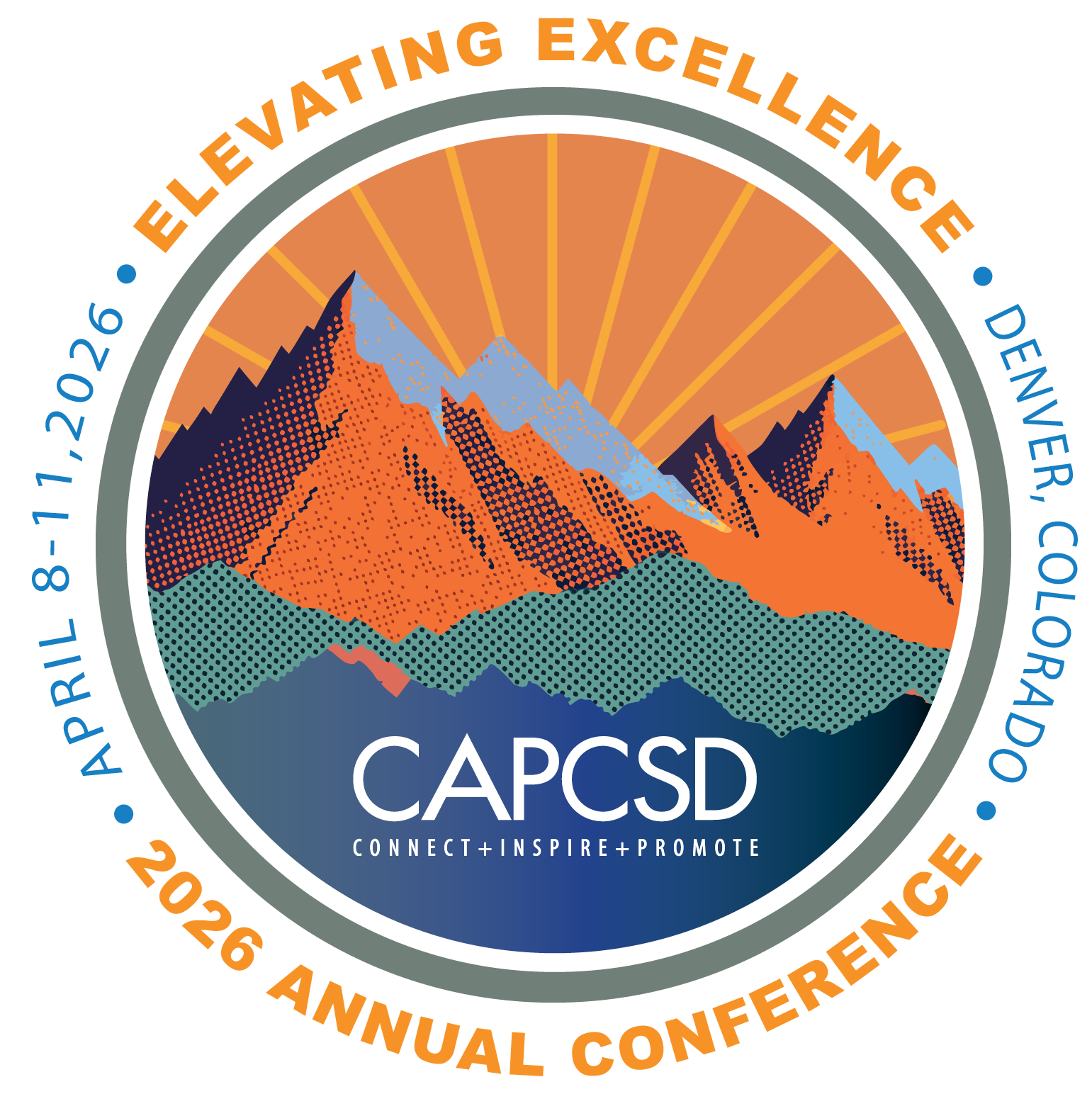
2026 Annual Conference | Elevating Excellence | April 8-11, 2026 |
|
Annual Conference Early Bird Registration Now through Saturday, February 28 Members & Affiliate Members: $625 Non-Members: $775
Regular Registration Rates begin Sunday, March 1 Members & Affiliate Members: $775 Non-Members: $925
Pre-Conference Sessions (4/8/26) Each 4-hour option requires a registration & fee. Members & Affiliate Members $100 Non-Members: $150
Hotel Room Block Hyatt Regency Denver at Colorado Convention Center $259 room rate + 15.75% taxes = $299.79 per night King & Two-Queen Bed Rooms are available Make your room reservations as soon as block opens as the block fills up each year! |
|
|
|
DEIB |
|
When Belonging Begets Belonging |
|
Belongingness is not an aspirational concept in Communication Sciences and Disorders (CSD); it is a foundational condition for learning, professional identity formation, and ethical culturally responsive clinical practice. In CSD, students are asked to engage deeply—with vulnerability, cultural humility, and reflective capacity—while navigating high expectations, evolving clinical competence, learning in real time, teambuilding, and assessment-focused supervision. These demands do not pause with the turn of a calendar year; rather, they tend to evolve across semesters, practica, and lived experiences with an anticipatory energy that is delightful to be part of. Without belonging, such demands can limit learning. With belonging, they become opportunities for growth, self-exploration, renewal, and the affirmation of identity within a profession that values humanity as much as competence. |
|
|
The start of a new academic year or semester offers a particularly powerful moment for reflection within clinical education. Graduate student clinicians enter each the new year carrying much -- prior learning, fatigue, confidence, doubt, and the desire to contribute and make a meaningful difference. Belongingness recognizes the ongoing nature of professional preparation and creates space to honor what students and educators bring forward, what they may need to release, and how they wish to further develop their professional purpose (see the Belonging Checklist). In doing so, belonging becomes not only a condition for learning, but a mechanism for sustained engagement and ethical integrity over time in the profession.
Historically, diversity efforts across a wide range of professional, employment, and educational contexts had focused on representation—measuring progress by who is admitted, hired, or present—but often overlooking the lived experiences of those individuals when inside these spaces. We know that representation has not guaranteed that individuals feel safe, valued, or able to participate fully, particularly as expectations intensify over time. An emphasis on belongingness shifts the focus from mere presence to the quality of experience. It asks whether individuals feel seen, heard, supported, and able to contribute meaningfully at different points in their developmental journey. These experiences of mattering are essential to the professional clinical development of student clinicians and those who provide their supervision and instruction, especially at moments of transition such as the beginning of a new year, new instruction, new spaces. Research across education, psychology, health and allied health sciences demonstrates that belonging predicts persistence, engagement, wellbeing, performance, and retention. In clinical education, belonging supports risk-taking by creating the psychological and relational conditions that make it safe to step into seemingly iterative uncertainty. This is especially critical in CSD clinical education, where learning depends on experimenting, creativity, innovation, practice, reflection, adjustment, relationship-building, and sometimes getting it wrong in front of others. Student clinicians who feel psychologically safe are more likely to ask questions, acknowledge uncertainty, integrate feedback, and engage in honest self-reflection—skills essential to a developing ethical and competent practice. Conversely, environments characterized by fear, shame, lack of recognition, or the absence of mattering inhibit learning and disproportionately affect students from historically marginalized backgrounds, particularly during periods of heightened evaluation or transition. The new year often amplifies these vulnerabilities, as students reassess their progress and recalibrate expectations under new circumstances.
Integrating belongingness into clinical education is not only a pedagogical choice, but an ethical one. Attention to belonging becomes a measure of our capacity to enact the ASHA Code of Ethics in everyday supervisory, instructional, and professional relationships. The Code explicitly requires that individuals shall not discriminate in their relationships with colleagues, students, and members of other professions on the basis of age, citizenship, disability, ethnicity, gender, gender expression, gender identity, genetic information, national origin—including culture, language, dialect, and accent—race, religion, sex, sexual orientation, socioeconomic status, or veteran status. When belonging is intentionally cultivated, these ethical commitments move beyond compliance and into lived practice. By centering belonging as a core condition of clinical education—and by honoring the reflective possibilities of the new year—CSD programs affirm that professional preparation is neither linear nor finite, nor merely transactional. Instead, it is an ongoing process that strengthens student clinicians, their educators, the profession, and the individuals and communities we serve. When belonging is intentionally cultivated into lived practice, it becomes generative: shaping clinicians who extend acceptance, care, and ethical practice to others. In this process of continual becoming, belonging begets belonging, creating the conditions in which learning, care, and justice converge. |
|
Leslie Crusco Grubler Ed.D., CCC-SLP |
|
Getting to Know CAPCSD's New Board Members |
|
CAPCSD's Board of Directors assigned a "Board Buddy" to each of its new board members to help transition into their three-year terms on the CAPCSD Board of Directors. To help our CAPCSD member programs get to know our new board members, each month the newsletter will feature a board buddy asking the new board member questions.
This month, President-Elect Christie Needham sits down with Kelly Rutherford, our new Secretary. |
|
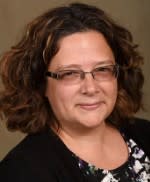
|

|
Christie Needham, MA, CCC-SLP, is a Professor and Director of Clinical Education at Baldwin Wallace University's Department of Communication Sciences and Disorders. This is her third year on the CAPCSD Board of Directors. |
|
Kelly Rutherford, EdD, CCC-SLP, is an Associate Professor in the Department of Communication Disorders. Kelly joined the CAPCSD Board of Directors as Secretary on July 1, 2025. |
I was privileged to serve on the CAPCSD DEIB committee and to witness firsthand the incredible work being done there. That experience gave me a front‑row seat to the impact our organization can have, and it deepened my belief in the importance of service. I didn’t want my involvement to end as my term was wrapping up - I wanted to continue contributing in a way that would support the organization’s mission more broadly.
When the opportunity arose to apply for secretary of the board, I was eager to step forward. For me, service is about showing up where I can make a difference, and this role felt like a natural extension of that commitment. It allows me to give back to an organization that has already given so much to our professions.
The most surprising part of serving on the board has been how impressed I am by each member and the dedication they bring. Everyone serves because they truly want to strengthen our professions by supporting CSD higher education programs in ways that foster innovation, leadership, collaboration, equity, and more.
I expected the work to be meaningful, but the scope and impact of what the board accomplishes each month has far exceeded my expectations. It is inspiring to see how much can be achieved when people are united by a shared mission. What also stands out is the board’s ability to listen to diverse perspectives and make thoughtful decisions guided by our mission, vision, and values.
Serving on the board has reinforced for me how much strength and resilience exists within our profession. I’ve seen firsthand the creativity and dedication that colleagues bring to advancing CSD higher education, and it has taught me that progress is always possible when people work together with shared purpose.
On a personal level, the experience has reminded me of the importance of listening, collaboration, and humility. I’ve learned that leadership is not about having all the answers but about creating space for diverse voices and perspectives to shape the path forward. |
|
The Admissions Corner is designed to help programs with the admissions process for graduate education programs in audiology and speech-language pathology. We want to provide information related to WebAdMIT (the program-facing program), CSDCAS (the applicant-facing program), application management, and multiple other issues related to admissions. We are focusing the next few Admissions Corner articles on preparing for different stages of the application process.
Last month, we talked about application management and supporting students. Strategies include using the tools that are already built into WebAdMIT, objectively evaluating our own application processes, and supporting our own undergraduate CSD students in the application process. This month’s focus is on starting the admissions process.
Given the nationwide decline in undergraduate majors in Communication Sciences and Disorders, it is essential that all programs develop strategies to attract, engage, and hold on to applicants. Here are some strategies for this part of the process:
(1) Make reviews flexible within the limits of your deadlines. Some of your faculty reviewers will return from "vacation" recharged. Some of your faculty reviewers will return burned out. If you can, schedule both your online CSDCAS reviews and your online or in-person interviews in a way that maximizes your Admissions Committee energy and availability. Most universities start the Spring 2026 semester on Tuesday, January 20. Do you have pre-session courses that start the week before? If so, make accommodations for your faculty teaching pre-session courses who are reviewing applications. If you have non-university reviewers, their schedule rarely follows that of the typical university. Ask them if they have any additional availability to help out. If they are also your external supervisors, they have a vested interest in knowing who you are accepting into your SLP and AUD programs. You also might have the option of incentivizing them for extra service in a non-financial way. Work with them. And, as was mentioned before, seek out additional reviewers from non-conventional pools if you need help.
(2) Accept the changing landscape, and adapt to it in a way that makes your program the best place for an applicant to be. As mentioned in the last Admissions Corner, there has been at least a ten-year decline in CSD undergraduates. This means two things: (1) It is easier for an applicant to be attractive for admission to an MA/MS or AuD education program and (2) applicants to our education programs are more serious and have more options. We as a discipline need to nurture our CSD undergraduates as they move on to graduate education programs in CSD. Do you have an answer if your CSD undergraduate student says, "I'm considering a Master's degree in [another field]"? It is true that there are a hundred graduate degrees that are easier than ours in CSD, but a great place to start to answer the student's question is the U.S Department of Labor Statistics website for workforce data (https://www.bls.gov/). The median salary for both of our professions is rather compelling. Just make the case. Money is not the only one.
(3) Invite applicant visits and sell your program as the ideal place for each applicant. Given the highly competitive nature of admissions in our graduate programs at this time, a campus visit is a perfect time to sell your program. Don't be afraid to answer every question honestly. Applicants who are accepted to your program appreciate honesty. What are the strengths of your programs? They don’t care about this because programs share the same strengths. What are the weaknesses of your programs? They care about this because programs don’t share the same weaknesses, and this is where you need to have an answer. Many historically competitive programs don't have the same funding, the same faculty, or the same university support that they had ten years ago. What is unique about your program? What can you offer an applicant who likely has multiple offers of admission? This is what you can tease out during a campus visit. Don't be afraid to employ your Office of Student Affairs; their paid job is to help you. Their role is to make your potential CSD graduate students welcome from the moment they step on your campus to the moment they leave for home. If you need help with the admissions processes for your MA/MS and/or AuD graduate education programs, or you need help with WebAdMIT or CSDCAS, please do not hesitate to reach out to the Admissions Committee and CAPCSD’s Director of Centralized Admissions.
The Admissions Committee wishes you a great start to the Spring 2026 semester. |
|
Admissions Committee Contacts https://members.capcsd.org/admissionscommittee
Teasha McKinley, Director of Centralized Admissions |
|

|
|
|

|
|
Build Inclusive Excellence: Two Essential Webinars for CSD Educators & Clinical SupervisorsThis January, we're bringing you two powerful webinars that will transform how you support LGBTQ+ students and clients in CSD education. Whether you're leading a classroom discussion, supervising clinical practicum, or mentoring the next generation of CSD professionals, these webinars will equip you with the language, tools, and confidence to create truly inclusive spaces. Registration is separate for each webinar. You may attend one or both sessions based on your learning needs. Attending Both? Use discount code CSD26 at checkout when you register for both webinars to save 20%. |
|
|
|

Webinar 1: Inclusive Pedagogy in CSD Education
|
|
🗓️ Thursday, January 29, 2026 0.10 ASHA CEUs |
|
|
Master Motivational Interviewing: A Two-Part Webinar SeriesCounseling is one of ASHA's 8 pillars of practice, yet many clinicians don't feel fully prepared to provide it. This two-part webinar series will give you the practical skills and training strategies you need—whether you're strengthening your own counseling approach or teaching the next generation of SLPs. Registration is separate for each webinar. You may attend one or both sessions based on your learning needs. Attending Both? Use discount code MMI26 at checkout when you register for both webinars to save 20%. |
|
|
|

|
Part 1: Motivational Interviewing Primer
🗓️ Tuesday, February 10, 2026 0.10 ASHA CEUs |
|
Part 2: Training Students in Motivational Interviewing and Other Counseling Tech
🗓️ Thursday, February 12, 2026 0.10 ASHA CEUs |
|
|
|
Integrating GenAI with Integrity: Ethical & Practical Considerations in CSD
Participants should attend this session if they are seeking a balanced, informed look at GenAI that goes beyond hype. This session offers concrete examples, ethical considerations, and actionable strategies to help professionals in audiology and speech-language pathology integrate AI safely, confidently, and in alignment with professional expectations.
🗓️ Wednesday, March 25, 2026 0.10 ASHA CEUs |
|
|
|
|
|
CAPCSD On-Demand Opportunities |
|

|
Key Principles in CSD Clinical Education
CAPCSD’s Clinical Education Committee developed this online, on-demand, course for individuals supervising students to get their 2-hr supervisor CEUs for ASHA.
This valuable resource is provided at no cost to CAPCSD member programs and their affiliates. Access to the course is available with a code provided to all CAPCSD members when they log in to their account at the top of the Info Hub page. Member programs are encouraged to share the link to this resource with individuals involved in the clinical instruction of graduate students, whether on-campus or off-campus. |
|
|
|
Building Clinical Expertise through Feedback: Nurturing Constructive Supervision Connections Feedback is the most powerful and diverse tool supervisors use when providing clinical instruction, guidance, and mentorship; however, it is also the most misused tool. Feedback is not a “one size fits all” approach but one impacted by factors such as generational differences, purposeful application of learning theories, and should be provided with the intent and purpose to encourage the development of clinical expertise and clinical reasoning skills. This session will discuss feedback methodology through the lens of learning theory, supervision frameworks, and aspects of generational differences.
Course approved for 0.20 ASHA CEUs. |
|
|
|
ETS Praxis Exam Preparation In this recorded webinar, students will hear directly from Jason Dietrich, ETS Director of Education Partnerships, who provides a comprehensive overview of the Praxis Audiology and Speech-Language Pathology exams. Topics include exam development, registration, scoring, test-day tips, available resources, and delivery formats.
This webinar was recorded on December 17, 2025, and is not eligible for CEU credit. |
|
|
|


|
https://www.capcsd.org January 2026 |